Hello I need help with my shamisen it sounds like a guitar

Hello I 3d printed this 1 to 1 shamisen because buying one (even a beginner shamisen) would cost me around 350 euros I finally got the strings on and the fujako
But when I strike it it sounds nothing like it it sounds more like a guitar a really stuff guitar

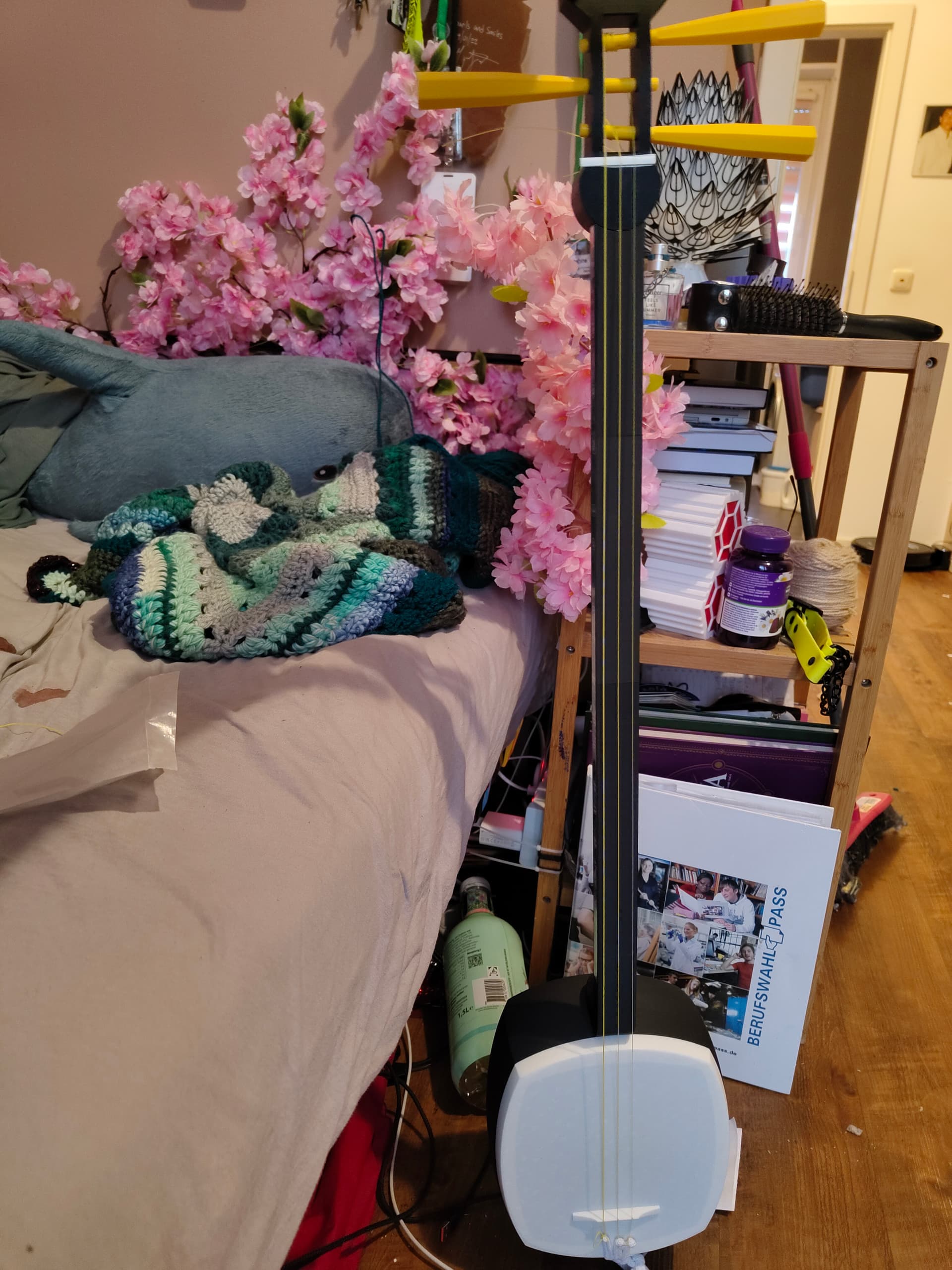
Could anyone help here is a picture

1 Like

What is the skin made of? How thick are the dou parts? That is a really thick kamikoma (the nut). You don’t have a asuma sawari or any sawari. That last one is likely the culprit.

17433630074985950923690130323024

The skin is plastic. The koma was included with the model
As for the asuma sawari I didn’t know I needed that

1 Like

It is what makes the buzzing sound in a shamisen. Also just hard plastic as a Skin won’t resonate well with the strings. Are you aware of the Bachido discord?

Seeing how it lacks the traditional ridge at the tenjin. Your only option is a asuma sawari.

Also welcome to bachido!

1 Like

Can I get an invite then ?

I’ve been trying to figure out an answer to the same question. It appears, in my humble opinion, that both your nut and bridge are the wrong types. I would try to solve the problem in the least invasive way and with the least expense.

Use CGC or CFC tuning, not higher as the strings should be as loose as possible. Then examine how you are hitting the strings. Strike directly toward the head, not at an angle as you do with a guitar. Next try moving the bridge 1/4”-1/2” toward the center as this will allow the head to flex more.

The bridge is too solid and has too much mass. Shamisen bridges are more hollow, which allows the vibrations to reverberate. Consider removing some of the wood from the bottom middle of the bridge. The head contact for the feet of the bridge should only be about 3/8” at each end. Ultimately you may need to buy a bridge specifically made for a shamisen because you need a properly working bridge to transfer the buzzing to the other strings.

The next thing I would consider doing is modifying the nut so that the biggest string (one on the left in your picture) lightly touches the fingerboard. You can deepen the nut slot for that string with a small file or x-acto knife until it starts to buzz. If necessary put a little tape on the fingerboard under the string 3/4”” away from the nut to adjust the buzz.

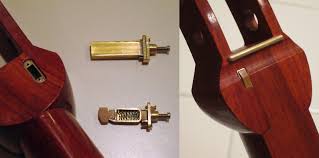
In the attached photo I have added a buzzing device to my tenor banjo made from a wine bottle metal cork wrap. Once the strings are tuned down a significant amount I get a nice buzz from it (pun intented).